Poor inventory visibility stands as the biggest problem for 45% of supply chain executives. This challenge affects customer satisfaction, daily operations, and profits directly. Online selling costs have risen for 93% of companies, making smart inventory management more crucial than ever.
Companies don’t deal very well with tracking inventory across their sales channels. This remains the top obstacle for almost half of all businesses. But organizations that become skilled at managing their supply chain can turn chaos into perfect order fulfillment. Companies with strong inventory tracking capabilities see happier customers, better stock levels, and quicker delivery times. These improvements matter even more as businesses face mounting pressure to ship orders faster.
Managing inventory across global networks brings unique challenges. Wrong inventory decisions can get pricey. Too much stock locks up money and raises storage costs. Too little means lost sales. That’s why 88% of organizations work with logistics providers or plan to do so. Companies falling behind in inventory management lose ground to their more capable competitors.
This piece shows you how to gain complete inventory visibility and tackle common roadblocks. You’ll find practical ways to turn inventory management from a headache into a business advantage. We cover everything from basics to advanced tracking systems that deliver real value to your business.
Understanding Global Inventory Visibility
Global inventory visibility is the life-blood of supply chain management that provides a combined view of inventory across multiple sites, enterprises, and participants throughout your global network. This detailed capability lets businesses track inventory immediately at both internal and external ship nodes.
Your entire stock can be seen everywhere, all at once through global inventory visibility. This unified view covers inventory across warehouses, stores, and ecommerce platforms. Businesses maintain centralized control whatever the physical location of their products.
The scope of inventory visibility extends across different dimensions:
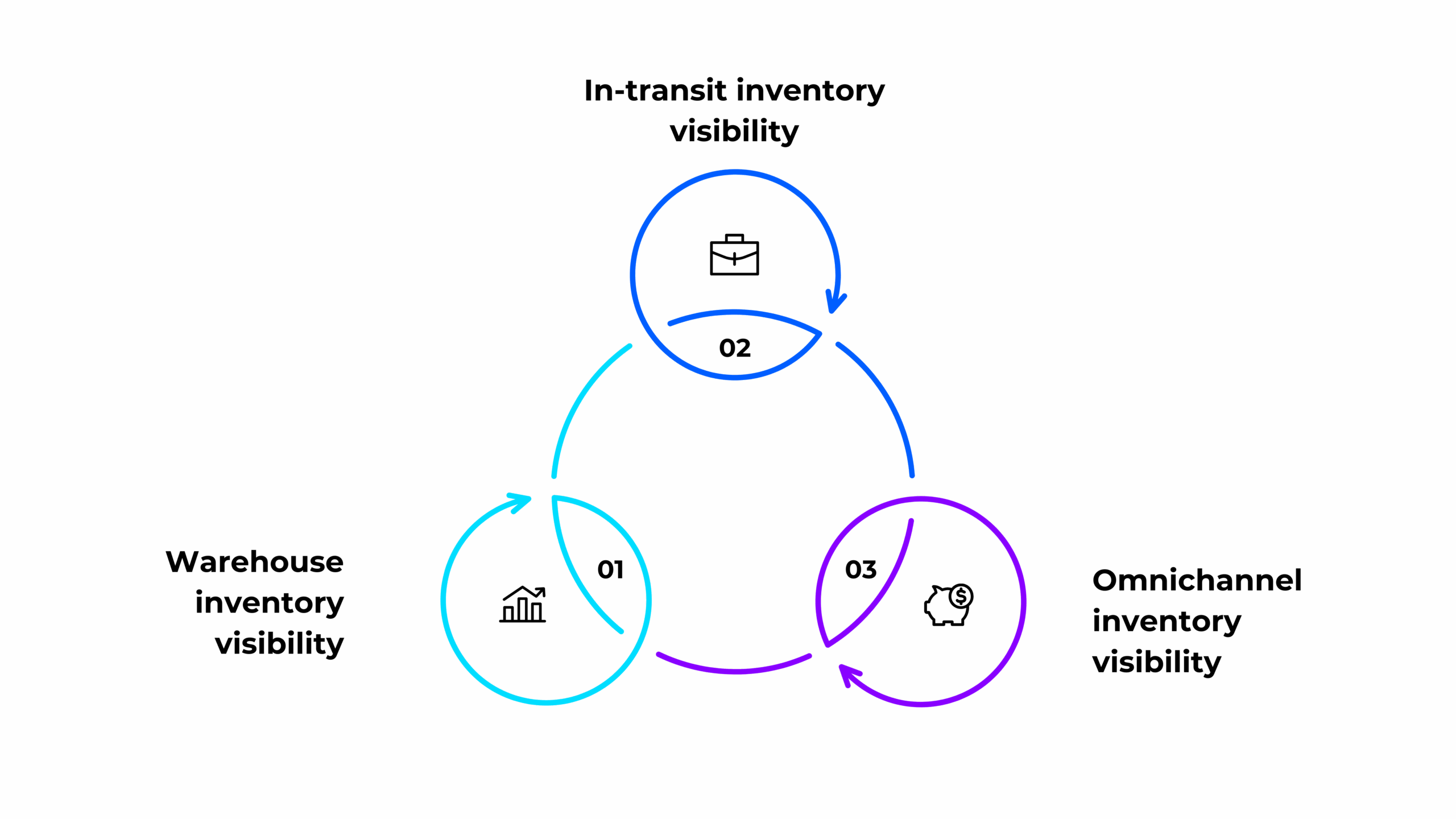
- Warehouse inventory visibility: Tracks stock stored at specific warehouses or distribution centers
- In-transit inventory visibility: Monitors shipments between locations to maintain accurate delivery timelines
- Omnichannel inventory visibility: Combines inventory data across physical stores, ecommerce sites, and third-party marketplaces
Inventory visibility covers both inventory in motion (goods actively being transported) and inventory at rest (products stored in warehouses or retail locations). This difference is significant to achieve end-to-end supply chain visibility.
Advanced inventory visibility solutions, provide synchronized immediate availability views of virtually all supply and demand from multiple systems. These include in-store, distribution centers, distributors, suppliers, and in-transit inventory. Intelligent sourcing engines optimize inventory across the extended enterprise to deliver the best Available-to-Promise (ATP) dates and most efficient fulfillment options.
Inventory visibility acts as the backbone of positive customer experiences in an omnichannel environment. Retailers can drive more foot traffic into stores, increase sales, improve inventory turns, and reduce markdowns by showing customers real-time inventory availability.
Discrete inventory data points exist in multiple systems and platforms. Data integration becomes vital. Successful implementation needs effective data sharing across warehouse management systems, retailer platforms, eCommerce databases, and supplier systems.
Modern integrated technologies offer exceptional visibility that replaces excess inventories with analytical supply chains adapting to changing demand. This approach supports both customer service excellence and reduces supply chain costs substantially. Inventory visibility has become a necessity for competitive operations rather than just a luxury.
Benefits of Inventory Visibility
The present fast paced customer-centric market requires businesses to meet expectations for speed, accuracy, and convenience in order fulfillment. Achieving this level of performance hinges on having real-time, end-to-end visibility into inventory across all channels and locations. Inventory visibility is not just a logistical advantage, it is a strategic enabler of operational efficiency and customer satisfaction.
Let us look at a few benefits that inventory visibility brings about:
- Faster and Accurate Order Fulfillment: Enables on-time delivery, and minimizes error and delays, by identifying the best stock locations to fulfill orders. This ensures that customers receive the product exactly when they expect it.
- Minimized Backorders: With real-time inventory visibility stock levels are kept in check, reducing stockouts and preventing customer churn due to unavailable products.
- Reduced split shipments: Inventory visibility helps identify warehouses with complete order inventory, avoiding the cost and complexity of shipping multiple shipments.
Therefore, investing in a robust inventory visibility solution is a necessity for most businesses to achieve success.
Key Challenges in Achieving Real-Time Inventory Visibility
Companies invest heavily in inventory management systems, yet live inventory visibility remains out of reach for most organizations. Recent reports show that 94% of businesses lack full visibility of their supply chain and logistics operations. Only 6% of companies have achieved complete supply chain visibility.
The path to perfect inventory visibility faces several major challenges. Complex supply chains from globalization and multi-tier networks make it hard to maintain a clear picture of inventory in locations of all types. Different functional departments use non-integrated software that creates problematic data silos and causes information inaccuracies.
Organizations implement sophisticated systems internally but face technology barriers because supply chain partners lack resilient infrastructure to track inventory live. Legacy IT systems work in isolation, making it hard for stakeholders to get a complete picture of ground-level operations.
Traditional inventory management’s technical architecture creates a major roadblock. Orders moving from warehouse to central hub for final dispatch have minimal in-transit visibility because warehouse management systems (WMS) and third-party logistics providers’ systems don’t work together. Transport management systems (TMS) rarely sync with inventory management systems.
Inadequate legacy systems create problems because they weren’t built to handle live updates of inventory in different statuses. Traditional ERPs serve as financial systems of record with rigid logic that controls data processing—they use sequential batches and restrictive file formats instead of live updates.
There’s also the challenge of inconsistent tracking across different software platforms and spreadsheets that leads to time-consuming, redundant, and error-prone processes. Staff resistance to new technology slows adoption rates, requiring complete training programs and change management strategies.
Solutions to Improve Inventory Visibility
Supply chain visibility gaps need targeted solutions to transform inventory management. Organizations can now track their inventory like never before, thanks to modern technology.
New and advanced technology helps businesses see their inventory better. Companies leveraging such technologies can cut their yearly inventory variance and make inventory accuracy three times better. This makes everything much faster.
Your supply chain works better when ERP and WMS systems work together. This team-up gives you one reliable source for all inventory data. The ERP watches everything from above while the WMS gives immediate updates from the warehouse. This teamwork keeps inventory records accurate and helps plan better to meet what customers want.
Cloud-based inventory systems give you many benefits without buying lots of hardware. You won’t have to worry about servers, upgrades, or desktop software anymore. These systems let you see your inventory right away through barcode scanning, which makes tracking stock in different places much easier.
Soft reservation features are a vital solution too. The Inventory Visibility service lets you save virtual inventory for key sales channels before actual sales happen. This stops inventory from being double-booked when multiple systems take orders. The system automatically adjusts these reservations when orders are ready to ship.
These solutions help businesses track inventory changes immediately in all channels. The Inventory Visibility service handles millions of inventory updates quickly. It shows the latest numbers right away – every second or minute – based on your update schedule.
Conclusion
Supply chain operations can revolutionize through better global inventory visibility. Our piece shows that 94% of businesses lack full visibility and only 6% achieve complete supply chain transparency. Notwithstanding that, companies gain substantial competitive advantages when they implement detailed visibility solutions.
Data silos, complex global networks, and disconnected legacy systems create tough barriers. Modern solutions with advanced technology offer remarkable improvements that reduce annual inventory variance for organizations. The integration of ERP with warehouse management systems creates a single source of truth across operations.
Cloud-based inventory management systems eliminate hardware concerns and provide immediate visibility through automated scanning processes. These systems’ soft reservation capabilities prevent double-booking across multiple sales channels and ensure inventory accuracy during peak periods.
The advantages go way beyond the reach and influence of operational efficiency. Companies that master inventory visibility see increased customer satisfaction, optimized stock levels, and faster fulfillment times. These benefits matter more as pressure grows for rapid order delivery.
At Acuver, we believe that inventory visibility acts as the backbone of positive customer experiences in today’s omnichannel environment. For us it is not just a technical challenge but a strategic necessity that affects the bottom line and customer relationships.
Although, the path to perfect inventory visibility might seem overwhelming, with our experts on your side, you can turn what looks chaotic into a simplified, efficient fulfillment operation. This delights customers and maximizes profitability.