Do you watch your delivery operations team rush around to fulfill same-day delivery promises while your competitors handle it with ease?
Many businesses face this challenge. Same-day deliveries have become more demanding as customer expectations continue to rise. This service has evolved from a luxury option to a standard offering. Many companies now struggle with delivery issues that directly impact their revenue.
The distinction between companies that struggle and those that excel often depends on five essential approaches. These game-changing strategies will enhance your delivery operations, whether you face delays, route problems, or customer satisfaction issues.
Let’s take a closer look at these tested delivery methods. They have helped numerous businesses achieve same-day delivery success without excessive costs or team burnout.
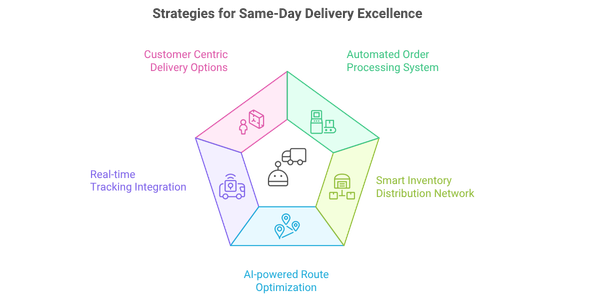
1. Automated Order Processing Systems
Automated order processing systems forms the backbone of successful same-day delivery operations. Let’s look at how this revolutionary technology can reshape your delivery strategy.
Order Processing Technology Solutions
Order processing technology is growing faster than ever, making same-day delivery more achievable. Modern automated systems processes orders in under two minutes. This marks a huge improvement from traditional manual methods.
The technology stack has AI-driven solutions that handle everything from order capture to fulfillment. These systems check stock availability and payment details automatically. They also find the nearest warehouse or fulfillment center to cut delivery distances. The most impressive part? These solutions can process orders from multiple channels – websites, emails, or EDI systems.
Automated Processing Benefits
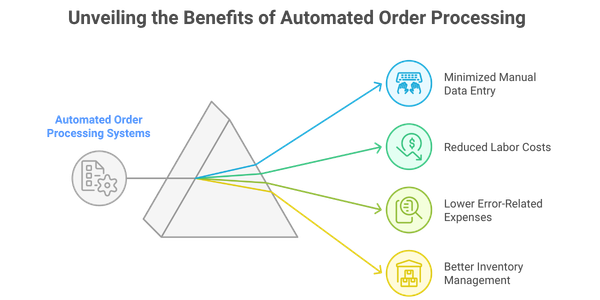
Automation changes delivery operations. Companies using these systems report cost reductions of 10-15%. The results can be even better with proper implementation. Here are the key benefits:
- Reduced human error through automated data extraction with 100% accuracy
- Faster order fulfillment with processing times reduced from days to hours
- Better customer satisfaction through immediate order tracking and updates
- Better operational efficiency with automated inventory management
Customer service improvements stand out the most. Automated systems handle customer communications. They send immediate updates about order status and estimated delivery times. This proactive approach reduces customer service inquiries while making customers happier.
Implementation Cost and ROI
The investment in automated order processing systems usually ranges from $200,000 to $400,000. This might look like a big number, but businesses typically achieve payback within three months.
The ROI looks even better when the long-term benefits are considered. There are major reductions in operational costs through:
- Minimized manual data entry requirements
- Reduced labor costs for order processing
- Lower error-related expenses
- Better inventory management efficiency
The best part? These systems grow with your business. Companies start with simple automation and expand gradually to handle more orders without adding staff or resources. This scalability helps organizations stay competitive in today’s faster-moving same-day delivery market.
2. Smart Inventory Distribution Network
Smart inventory placement is the secret sauce that makes same-day delivery operations successful. Let’s look at how changing delivery strategies through smart distribution methods.
Micro-fulfillment Centers Strategy
The way businesses handle local deliveries through micro-fulfillment centers (MFCs) has changed dramatically. The numbers tell an amazing story – automated MFCs will grow from just 86 centers in 2021 to about 7,300 by 2030.
MFCs’ compact nature gives them their biggest advantage. These facilities take up 3,000 to 10,000 square feet and can hold up to 15,000 different items. The results are impressive – these centers cut cost per order by 75%.
MFCs work so well for same-day delivery because:
- They sit in urban areas to cut delivery distances
- Their compact designs maximize storage space
- Automated systems process orders quickly
- Technology helps reduce labor needs
Inventory Distribution Best Practices
The hub-and-spoke model proves most effective for optimizing distribution networks. This model helps us run timely trips between suppliers, distribution centers, and cross-docks based on expected demand.
Success in distribution strategies depends on these key factors:
- Geographic Assessment: A review of transport networks, workforce availability, and room to grow
- Multiple Hub Establishment: Strategic distribution points across key population areas
- Automation Integration: Automated storage and retrieval systems (AS/RS)
- Space Optimization: Systems that store 75% of inventory in just 5% of the distribution center’s space
Real-time Stock Management
Real-time inventory management powers efficient same-day delivery operations. Tracking systems give a clear view of supply chain operations. The network updates automatically across all locations.
Real-time inventory management is changing how decisions are made. Items are tracked from warehouse scanning to shipping prep. This clear picture helps us make quick, smart choices about where to put stock and when to reorder.
Distributed order management (DOM) systems have revolutionized operations. These systems show everything about inventory, orders, and shipments as products move from production to delivery. Automation and integrated systems create central hubs that handle fulfillment tasks efficiently.
Good storage practices make real-time inventory management work better. Organizations often use warehouse space to rotate inventory through FIFO (First In, First Out). This approach simplifies storage operations and cuts waste.
3. AI-Powered Route Optimization
AI-powered route optimization is the missing piece that ties everything together after optimizing inventory distribution and automating systems. This breakthrough helps achieve same-day delivery excellence.
Machine Learning in Route Planning
Machine learning is reshaping route planning throughout years of deploying delivery solutions. These smart algorithms analyze data about traffic patterns, weather conditions, and past deliveries to find the quickest routes. The systems amaze with their power to process millions of routes and generate precise ETAs while accounting for different vehicle types and their characteristics.
Machine learning algorithms excel at:
- Predicting future demand patterns and traffic conditions
- Processing complex multi-dimensional optimization problems
- Continuously improving through iterative learning
- Reducing operational costs through efficient routing
Dynamic Route Adjustment Features
Real-time adjustments create the real magic. Systems continuously analyze data from GPS tracking, traffic databases, and weather forecasts. The system automatically fine-tunes routes to maintain delivery efficiency when unexpected situations like traffic jams or road closures occur.
These dynamic adjustments have reshaped delivery operations. Smart trucking solutions with AI and IoT integration helps companies reduce transit time by 20%. The system’s quick routing decisions based on immediate data proved game-changing for same-day delivery operations.
The most meaningful features of dynamic route adjustment include:
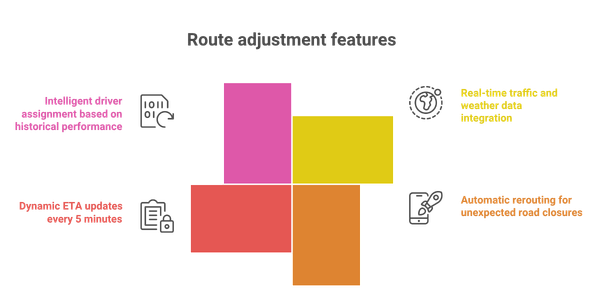
- Real-time traffic and weather data integration
- Automatic rerouting for unexpected road closures
- Dynamic ETA updates every 5 minutes
- Intelligent driver assignment based on historical performance
Route Optimization Technology Costs
Numbers tell the story best. Businesses typically achieve ROI within 3 to 12 months. The original investment might look substantial, but companies often reduce transport costs by 10-30%.
Results consistently show substantial cost savings across numerous businesses that have implemented AI route optimization. A national courier company reduced delivery times by 20% and cut fuel costs by 15%. These savings grow over time, making the investment more valuable.
The systems keep generating value long after implementation. Algorithms become more efficient through continuous learning and optimization. Companies not only cut operational costs but also boost customer satisfaction through reliable delivery times and better communication.
The technology keeps evolving, which makes it exciting. These systems predict potential disruptions before they happen, so we can adjust routes proactively. This predictive capability helps maintain consistent service levels and meet customer expectations even in challenging conditions.
4. Real-Time Tracking Integration
Real-time tracking has changed how we handle same-day deliveries. This technology turns delivery operations from a guessing game into a clear, manageable process.
Tracking Technology Solutions
Modern tracking solutions now have cloud-based order entry and monitoring features, and watched them boost delivery accuracy. These systems can track assets throughout the supply chain and factor in traffic, congestion, and weather conditions.
The technology stack has:
- GPS and telematics hardware integration
- Cloud-based tracking platforms
- Electronic proof of delivery (ePOD) systems
- Real-time data synchronization capabilities
The best tracking solutions have full EDI/API support and custom web services integration. This creates smooth communication between different systems and gives us a complete picture of all delivery operations.
Customer Communication Systems
Customer communication about deliveries has completely changed. Modern systems now send automatic updates at key delivery stages. This creates a level of transparency we couldn’t dream of a few years ago.
The communication framework set up has:
- Automated delivery status notifications
- Real-time ETA updates
- Direct driver communication capabilities
- Custom delivery preference management
- Safe place delivery instructions
The best part is that customers can now message drivers directly with specific instructions or access codes. This feature alone has cut down failed deliveries and made customers happier.
Delivery Visibility Tools
These visibility tools give detailed insights that help both operations teams and customers. These solutions have customizable reporting and dashboards, which help teams make better decisions throughout the shipping process.
One of the most effective features we’ve added lets us capture several forms of delivery confirmation:
- Electronic signatures through Sign on Glass technology
- Geotags and timestamps for every delivery
- Photo documentation of delivery completion
- Video confirmation for safe place deliveries
These tools have cut failed deliveries substantially. Most businesses now reach almost 100% delivery success rates. The system sends delivery notifications with digital PDF documentation that includes customer signatures, geotags, and timestamps.
These visibility tools stand out because they give instant feedback on order status. These solutions work offline in areas with poor connectivity and sync automatically when the connection returns.
Businesses using detailed visibility tools see their customers’ satisfaction soar. Giving customers real-time tracking links and dynamic ETAs has turned delivery from an uncertain waiting game into a smooth, trustworthy experience.
5. Customer-Centric Delivery Options
Successful same-day delivery depends on adapting to customer priorities. Research shows that 61% of customers are willing to pay more for faster shipping. This makes it vital to provide options that line up with what they expect.
Flexible Delivery Windows
Today’s consumers just need complete control over their delivery experience. Data shows that 69% of customers now expect Amazon-level delivery efficiency. Dynamic delivery windows have rolled out that let customers pick delivery times fitting their schedules.
Here’s what works best in flexible delivery:
- Same-day and next-day delivery options
- Pre-scheduled delivery windows weeks in advance
- Weekend and evening delivery slots
- Real-time delivery window adjustments
The results are clear. Flexible delivery windows have substantially reduced failed deliveries. Customers become more available to receive orders when they can choose their preferred delivery time, which leads to fewer missed deliveries.
Customer Preference Management
Managing preferences goes beyond data collection. It’s about creating tailored experiences that strike a chord with each customer. A complete preference management system includes:
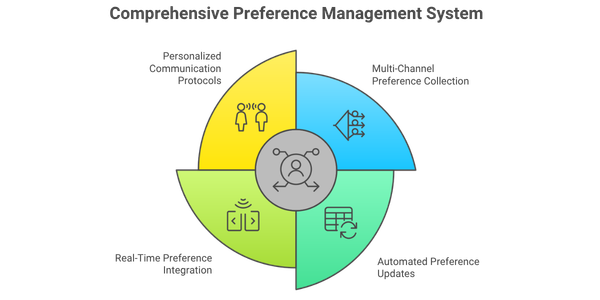
- Multi-channel preference collection
- Automated preference updates
- Real-time preference integration
- Personalized communication protocols
This approach has changed delivery operations completely. Preference management platforms now help tailor user experiences across digital platforms. These changes have reduced delivery failures and boosted customer satisfaction.
Delivery Experience Enhancement
Improving delivery service needs an all-encompassing approach. Data shows that 76% of consumers expect businesses to understand their unique needs and expectations. This makes personalization a key factor.
This has helped businesses implement several breakthrough improvements:
Dynamic notifications keep customers informed throughout the delivery process. These notifications adapt based on customer priorities – email, SMS, or app notifications.
Smart communication protocols adjust message frequency based on customer behavior. This prevents notification fatigue while keeping customers updated about important changes.
Flexible delivery options include:
- Same-day delivery for urgent needs
- Scheduled delivery for better planning
- Contactless delivery options
- Special handling instructions
Customer satisfaction has soared with these improvements. Businesses achieve higher customer retention rates and more repeat purchases by offering multiple delivery options.
Clear communication plays a key role in better delivery service. These systems give customers updates about:
- Estimated delivery windows
- Real-time status updates
- Any potential delays
- Alternative delivery options
The impact speaks for itself. Businesses using these user-focused delivery options report major improvements in customer satisfaction and loyalty. Research show that 40% of European customers will abandon their shopping carts if there’s no free shipping option above $174. This highlights why flexible delivery matters in today’s market.
Conclusion
These five delivery strategies have revolutionized business approaches to same-day deliveries. Implementing these solutions in companies of all sizes shows that success depends on combining these methods rather than using them alone.
This is where Acuver steps in.
Acuver unifies order processing, inventory positioning, route optimization, and real-time visibility into a single, connected execution layer, ensuring seamless data flow and faster decision-making.
The results are clear: cost reduction, near-perfect delivery accuracy, and higher customer satisfaction. With a phased approach, Acuver helps teams scale capabilities without disruption, building faster, smarter, and more reliable same-day delivery operations.
Want to elevate your delivery strategies? Contact us today.