Software bugs continue to cost the global economy enormously, and the financial impact keeps growing as systems become more complex.
Quality assurance means more than just finding defects – it prevents them from happening in the first place. Today’s rapid development cycles and complex software systems have outpaced traditional manual testing methods. Automated testing has altered the map of quality assurance.
In this blog we’ll explore how continuous quality assurance with automated testing helps organizations deliver better software faster. We’ll get into everything from enterprise quality transformation and automation frameworks to risk-based testing approaches and scaling strategies. Quality engineers who want to improve their testing processes and business leaders looking to boost their quality control systems will find practical strategies they can use right away.
Enterprise Quality Transformation
Quality transformation plays a vital role to stay competitive in today’s ever-changing software development digital world. A significant proportion of digital transformation initiatives fail to meet their goals because of poor end-user adoption and inadequate planning.
Current State Assessment
A detailed assessment of current QA practices marks the beginning of every quality transformation journey. Existing processes, tools, and team capabilities need to be reviewed thoroughly. Research consistently highlights that customer experience is considered vital to enterprise success, which means customer-centric metrics must guide any quality assessment.
The assessment methodology reviews these key dimensions:
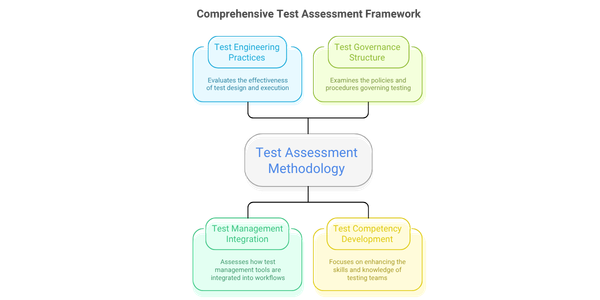
Quality Maturity Models
The Capability Maturity Model (CMM) framework helps review and improve QA processes. The model outlines five distinct maturity levels:
- Initial: Processes are ad hoc and sometimes chaotic
- Repeatable: Simple project management processes exist
- Defined: Standard processes are documented and integrated
- Managed: Processes are measured and controlled quantitatively
- Optimizing: Continuous process improvement is enabled
Only a small fraction of organizations reach maturity levels 4 and 5, which highlights the challenge organizations face in achieving high-maturity quality processes.
Transformation Goals and Objectives
Measurable improvements in quality and efficiency are the core transformation objectives. Enterprise testing budgets are substantial, making clear goals and metrics vital for success.
Key transformation objectives include:
- Improving worker performance through automation
- Optimizing customer service delivery
- Streamlining quality processes
- Enhancing security integration
- Scaling test automation enterprise-wide
Organizations that implement structured quality transformation see remarkable improvements. Companies with mature QA practices consistently achieve higher customer satisfaction scores in the software industry, proving the tangible benefits of quality transformation initiatives.
An enterprise quality transformation framework helps organizations merge isolated testing practices into an integrated, automated quality assurance approach. The widespread frustration among business leaders with IT’s failure to deliver value makes the move toward integrated quality practices more important than ever.
Designing the Automation Framework
A strong architectural foundation is vital to achieve long-term success in quality assurance. The right design patterns implemented early save much maintenance effort later.
Architecture Considerations
Automation frameworks need modular design to work well and stay reusable. Companies using modular test automation frameworks significantly cut their test maintenance work. Key considerations include:
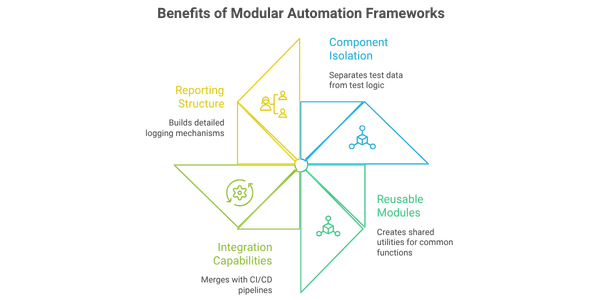
- Component Isolation: Separate test data from test logic
- Reusable Modules: Create shared utilities for common functions
- Integration Capabilities: Merge with CI/CD pipelines
- Reporting Structure: Build detailed logging mechanisms
Scalability Planning
Quality assurance teams must plan for scalability to handle growing test suites well. Cloud-based testing has proven valuable, with parallel testing delivering meaningful reductions in test execution time.
Frameworks should scale both horizontally and vertically to manage increased test volume while keeping performance high. Companies that use flexible automation frameworks see significant boosts in test coverage.
Security Integration
Modern quality assurance frameworks need security built in from the start. Security testing should run throughout the automation pipeline. Early security integration significantly cuts vulnerability detection costs.
Different security testing tools are appropriate at each stage:
- Static Application Security Testing (SAST) for code analysis
- Dynamic Application Security Testing (DAST) for runtime security verification
- Interactive Application Security Testing (IAST) for continuous security monitoring
This layered security approach works best when automated within the quality assurance framework. Automated security testing finds considerably more vulnerabilities than manual testing alone.
Test Automation Infrastructure
The right testing setup can substantially affect how well quality assurance works. Here’s a look at the essential parts that create a reliable testing infrastructure.
Cloud vs On-premise Solutions
The choice between cloud and on-premise testing infrastructure largely depends on what an organization needs. Cloud testing brings major benefits in flexibility and budget-friendly options, with organizations able to run builds significantly faster through cloud-based parallel testing.
Key differences between the two approaches:
- Cost Structure: Cloud testing follows a pay-as-you-go model, eliminating upfront infrastructure investments
- Scalability: Cloud platforms offer unlimited resource scaling capabilities
- Security: On-premise solutions give you better control over sensitive data
- Maintenance: Cloud providers handle updates and maintenance, which reduces operational overhead
Resource Optimization
Quality assurance practices need careful resource planning. Good resource optimization can meaningfully cut yearly operating costs. Several approaches have proven successful:
Parallel testing capabilities significantly speed up build times, allowing teams to run multiple tests at once and cut down overall testing time. Smart test selection techniques help identify and prioritize critical test cases, reducing test execution time considerably.
Environment Management
A well-managed test environment is vital for consistent quality assurance. Dedicated testing environments can boost test efficiency significantly. Three main aspects of environment management stand out:
- Environment Standardization: Test bed execution stays consistent across all testing phases
- Test Data Management: Unified test data repositories help improve efficiency
- Scalable Platforms: Platforms can handle growing testing needs while maintaining performance
Automated environment provisioning dramatically cuts setup time, covering configuration management, test data setup, and environment cleanup processes. Regular health checks and proactive maintenance reduce environment-related test failures and keep quality assurance processes reliable and efficient throughout the testing lifecycle.
Quality Gates and Metrics
Quality gates and metrics are the foundations of a continuous quality assurance strategy. Clear quality criteria established early in development substantially improves software reliability.
Defining Quality Criteria
Software quality assurance works best with measurable criteria. Organizations that implement quality gates in their CI/CD pipeline see meaningful reductions in post-release defects. Several metrics help produce a detailed quality assessment:
- Test Coverage and Effectiveness
- Defect Density and Distribution
- Code Quality Metrics
- Performance Measures
- Security Compliance Scores
Automated Quality Checks
Automated quality checks should run at every stage in the continuous integration environment. Companies using automated quality gates catch the vast majority of critical issues before production deployment. Continuous testing and automated verification help maintain quality standards throughout development.
Automated checks should look at multiple quality aspects. Organizations with detailed automated testing see significant improvement in testing efficiency, with the CI/CD pipeline monitoring these metrics and providing instant feedback about quality issues.
Compliance Validation
Compliance validation is vital to any quality assurance framework. A systematic approach ensures regulatory requirements are met consistently. The compliance validation process includes:
- Define compliance requirements based on industry standards
- Implement automated compliance checks
- Generate compliance reports and documentation
- Validate against regulatory frameworks
- Maintain audit trails
Automated compliance validation dramatically cuts audit preparation time. These compliance checks integrate directly into quality gates and prevent non-compliant code from moving forward. Continuous monitoring and measurement maintain high quality standards in all development stages. Organizations with well-structured quality gates achieve high success rates in meeting quality goals, and teams using automated quality metrics spend considerably less time on manual reviews.
Risk-Based Testing Approach
Risk-based testing is central to a strong quality assurance strategy. Focusing on high-risk areas first consistently produces the best results. Organizations using risk-based testing detect critical defects earlier in the development cycle, making it a highly effective approach.
Risk Assessment Methods
A systematic approach to assessing potential risks in software testing should look at both failure likelihood and its effect on business operations. Risk-based testing directs testing efforts where they matter most — delivering critical information at the right time.
Key risk factors to assess include:
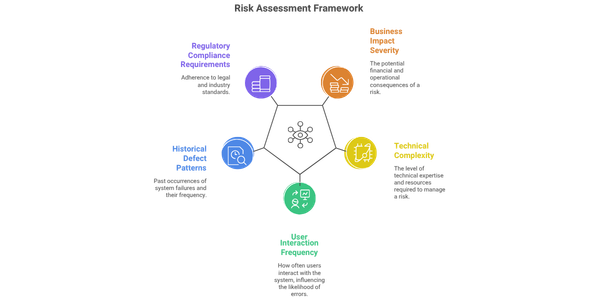
- Business impact severity
- Technical complexity
- User interaction frequency
- Historical defect patterns
- Regulatory compliance requirements
This detailed assessment confirms that risk-based testing cuts testing efforts and costs while finding critical defects early in the Software Development Life Cycle.
Priority-based Test Selection
Test selection needs a clear understanding of business priorities and technical constraints. A scoring mechanism that builds a matrix showing relative complexity of outcomes is a proven approach. The priority-based selection process follows these key steps:
- Assess requirement complexity
- Check business criticality
- Consider technical dependencies
- Analyze historical defect data
- Review resource constraints
This well-structured approach helps teams optimize testing resources while maintaining high-quality standards. Organizations using risk-based test selection see meaningful reductions in testing effort.
Coverage Optimization
Sophisticated strategies can maximize test coverage of high-risk areas while using resources efficiently. Risk-based coverage optimization leads to better defect detection rates.
Teams achieve optimal coverage by monitoring and adjusting testing strategy based on immediate feedback. This approach helps find severe faults earlier in regression testing. A combination of automated and manual testing methods gives the best coverage for high-risk areas.
Risk-based testing implementation helps teams identify and prioritize the vast majority of business-critical scenarios. This approach aligns quality assurance efforts with business objectives while maintaining strong software quality standards. Organizations using risk-based testing strategies consistently see significant cuts in post-release defects.
Continuous Improvement Process
Quality assurance works best when teams keep improving. Organizations that never stop getting better see their test coverage grow substantially over time.
Performance Monitoring
Performance should be tracked completely with different metrics and tools. Teams using automated performance monitoring spot problems significantly faster than manual tracking. The most important metrics to track include:
- Test execution time and efficiency
- Defect detection rates
- Code coverage metrics
- Resource utilization
- Customer satisfaction scores
Teams can cut their problem identification time considerably through constant monitoring. This forward-thinking approach helps keep quality high while making the best use of available resources.
Feedback Loops
Quick feedback is vital to keep improving quality assurance. Teams that use ongoing feedback can spot defects far faster than those relying on periodic reviews. Multiple feedback channels that enable rapid response to quality issues should be created.
Feedback loops work best when they have:
- Data collection automation
- Immediate analysis capabilities
- Clear communication channels
- Action item tracking
- Implementation verification
Teams that use automated feedback loops make their releases measurably better.
Process Optimization
Continuously improving processes makes quality assurance better and faster. Teams that keep getting better can meaningfully cut testing costs. The Plan-Do-Check-Act (PDCA) cycle provides a systematic improvement framework:
- Plan: Find ways to get better
- Do: Test changes on a small scale
- Check: Look at the data
- Act: Roll out what works to everyone
This method helps teams transform their quality assurance. Automated performance tracking helps teams fix problems significantly faster than old methods. Teams that connect feedback loops with CI/CD pipelines see considerably fewer problems after release. Measuring quality assurance against industry standards regularly helps maintain consistently high testing performance.
Team Collaboration Models
Quality assurance succeeds when teams work well together. Companies with well-integrated teams see markedly better software quality as a direct result of strong collaboration frameworks.
DevOps Integration
Quality assurance works better when it’s part of DevOps practices. Teams can cut their release cycles significantly while keeping quality high. These steps help achieve successful DevOps integration:
- Establish cross-functional teams with clear objectives
- Implement automated testing within CI/CD pipelines
- Create shared responsibility frameworks
- Deploy continuous feedback mechanisms
- Monitor and measure team performance metrics
Communication Frameworks
Communication is central to quality assurance success. Complete communication frameworks can substantially cut defect escape rates. The communication strategy focuses on these key elements:
- Real-time collaboration tools
- Standardized reporting mechanisms
- Regular cross-team meetings
- Automated notification systems
- Knowledge sharing platforms
Teams using well-structured communication frameworks work considerably more efficiently, and better efficiency relates directly to higher software quality and faster releases.
Shared Responsibility
Promoting shared responsibility for quality assurance is essential. Companies using shared responsibility models catch significantly more defects early. This approach makes quality assurance an organization-wide mindset rather than just one department’s job.
An enabling teams framework supports continuous knowledge sharing and skill development. These teams help streamline other teams’ work by providing expertise and support. Key factors that help implement shared responsibility include:
- Clear Accountability: Each team member understands their role in quality assurance
- Collaborative Planning: Joint sessions for test strategy development
- Shared Metrics: Common quality indicators across teams
- Cross-Training: Regular knowledge exchange sessions
- Unified Tools: Standardized testing and collaboration platforms
Companies that use these practices cut testing cycles meaningfully while maintaining higher quality. Teams working with shared responsibility models also report higher job satisfaction.
Dedicated enabling teams create self-service platforms and automation tools that cut dependency bottlenecks and make delivery more efficient. Stream-aligned teams own specific parts of the business or product, making decisions faster and needing less help from other teams. This approach speeds up delivery considerably. Platform teams build and maintain shared platforms and services that help streamline work across the organization, cutting redundant testing efforts in the process.
Refined team collaboration models create an environment where everyone owns quality. This mindset leads to markedly better first-time-right deliveries and fewer post-release problems.
Scaling Test Automation
Test automation scaling in an enterprise needs careful planning and systematic execution. Organizations that implement enterprise-wide test automation see meaningful increases in test coverage and substantial reductions in testing time.
Enterprise-wide Implementation
Success in quality assurance automation at scale depends on creating a unified testing ecosystem. Enterprises with a standardized automation approach achieve significant improvements in testing efficiency.
The most important factors that lead to successful enterprise implementation include:
- Standardized frameworks and tools
- Centralized test asset management
- Automated resource allocation
- Continuous monitoring systems
- Integration with existing workflows
Organizations that put these factors into practice see significant reductions in defect escape rates. The approach builds sustainable automation practices that grow with the organization.
Multi-team Coordination
Large-scale automation initiatives need sophisticated management strategies to coordinate multiple teams. Enabling teams should act as catalysts and provide expertise to optimize the work of other teams.
A proven coordination framework follows these steps:
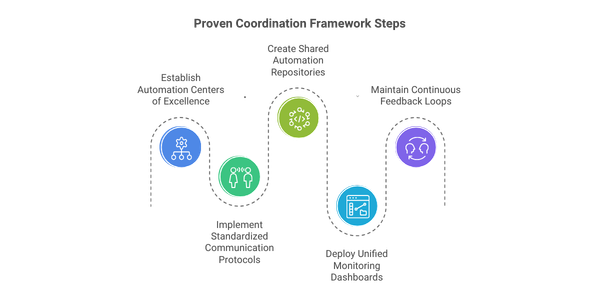
- Establish cross-functional automation centers of excellence
- Implement standardized communication protocols
- Create shared automation repositories
- Deploy unified monitoring dashboards
- Maintain continuous feedback loops
This well-structured approach delivers meaningful reductions in automation implementation time, while organizations with dedicated automation teams see notable improvement in script maintenance efficiency.
Global Testing Strategy
A global testing strategy creates a unified approach while adapting to regional variations. A well-designed global automation framework can meaningfully reduce testing costs while maintaining high-quality standards across different regions.
Several vital elements shape a strong global strategy: the automation framework should support multiple languages and locales; cloud-based testing infrastructure enables 24/7 testing across time zones; and clear governance structures maintain consistency across regions.
A stream-aligned teams approach works exceptionally well in this context. Cross-functional teams that own specific parts of the business or product reduce dependencies and speed up decision-making in global implementations.
AI-powered test orchestration platforms outperform traditional testing grids considerably, and cloud-based testing infrastructure enables high uptime with minimal network latency — helping maintain consistent quality standards in global operations.
Successful global implementation also needs resilient security measures, including advanced administrative controls, network governance, and data protection protocols that help organizations achieve certifications like SOC2 and comply with privacy standards such as GDPR.
Automated Testing: A Need of the hour
Automated testing has become vital for organizations that want to deliver high-quality software consistently. Companies with detailed test automation strategies consistently cut their testing costs and achieve higher customer satisfaction scores.
This piece explores everything in continuous quality assurance:
- Enterprise quality transformation frameworks that align testing with business objectives
- Reliable automation architectures that support flexible testing solutions
- Risk-based approaches that optimize testing resources and coverage
- Team collaboration models that promote shared quality responsibility
- Global implementation strategies that enable consistent testing in regions of all sizes
Companies that implement these practices see remarkable improvements, like faster release cycles, significant increases in test coverage, and fewer post-release defects. These results show how automated testing turns quality assurance from a bottleneck into a competitive edge.
Quality assurance automation evolves with emerging technologies and methodologies. Success comes from building strong foundations while adapting to change. Organizations that adopt automated testing today will be ready to deliver reliable, high-quality software tomorrow
This where Acuver can help.
Whether you’re just beginning your automation journey or looking to mature an existing QA function, Acuver’s Quality Engineering practice provides end-to-end support from test strategy and framework design through implementation, automation, and ongoing optimization.
Acuver’s approach is grounded in supply chain and enterprise technology execution, where the cost of a defect in production is not just a software problem, it’s a business impact. This means quality is treated as a first-class concern from day one, embedded into CI/CD pipelines, DevOps workflows, and release processes rather than bolted on at the end.
From risk-based test planning and automated regression suites to performance testing and compliance validation, Acuver helps organizations move faster without compromising on quality because in today’s competitive environment, the two are no longer mutually exclusive.
Get in touch with our team to discuss your quality assurance goals.